
How to validate capsule filter integrity?
2025-09-17
MS
24
Ensuring the integrity of capsule filters is essential to maintain safety, product quality, and process consistency—especially in critical applications such as pharmaceuticals, fine chemicals, and microelectronics. At Membrane Solutions , our capsule filters are designed with reliability in mind. Below are guidelines and methods to validate their integrity before and during use.
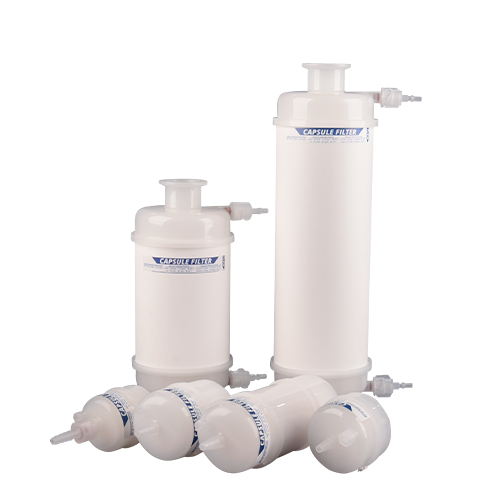
What Are Our Capsule Filters?
From the product page:
-
MS capsule filters are engineered for critical, small-volume filter applications in coatings, fine chemicals, pharmaceuticals, and microelectronics. membrane-solutions.com
-
They contain pleated, absolute-rated filter media, providing excellent particle retention at fast flow rates. membrane-solutions.com
-
The filters are constructed from all polypropylene, offering superior chemical resistance and durability in demanding process applications. membrane-solutions.com
These characteristics make integrity validation especially important, because any breach or defect in the filter can compromise safety, sterility, or purity.
Why Filter Integrity Matters
-
To ensure that the filter is free of leaks, tears, or defects that allow bypass of unfiltered fluid.
-
To guarantee the specified retention rating (e.g. removing particles of a certain size, or preventing microbial ingress).
-
To maintain process consistency: flow rates, pressure drops, and efficiency must align with specifications.
-
In regulated industries (such as pharmaceutical or biotech), validation is often part of compliance (e.g. GMP, USP, ISO).
Methods to Validate Capsule Filter Integrity
Here are common integrity testing methods adapted for the capsule filters and what to consider when choosing among them.
| Validation Method | Principle | When It's Suitable | Key Parameters to Monitor |
|---|---|---|---|
| Bubble Point Test | Determines the pressure at which the first continuous stream of bubbles passes through a wetted filter. The pressure correlates to pore size and verifies whether pores are intact. | Excellent for hydrophobic membranes; after assembly and before sterilizing. Works well if filter media is wiped or wetted properly. | Wetted liquid type, temperature, correct flow measurement, expected bubble point pressure per filter media type (e.g. PP, PTFE, PES). |
| Diffusion / Forward Flow Test | Measures the flow of a gas or liquid through the filter at a given pressure. Abnormally high flow after a pressure threshold can indicate leaks. | When bubble point test is not possible or after the filter is in use (periodic check). | Pressure applied, flow rate at set pressure, type of gas/liquid used, pre-conditioning. |
| Pressure Hold (Holding Time) | Holds the filter under a certain pressure for a duration and checks whether the pressure drops significantly (which could indicate a leak). | For sterile filters or when lasting integrity over time is critical. | Pressure level, duration, acceptable pressure drop, temperature. |
| Water Wetting / Leak Detection Test | For filters designed to be hydrophilic: wet with water and inspect for leaks using visual or dye challenge. For hydrophobic ones, other suitable liquids. | Useful when filter media allows visual inspection or dye penetration methods. | Proper wetting, dye type (if used), inspection procedure, safety of liquid used. |
| Post-use / Field‐Integrity Checks | Monitor for changes in differential pressure, turbidity, or microbial challenge during use. | In continuous operations or when re-using or according to clean-in-place (CIP) / sterilize-in-place (SIP) cycles. | Pressure drop profile over time, filtrate clarity, microbial counts, schedule of checks. |
Best Practices for Integrity Validation with Membrane Solutions' Capsule Filters
To get the most reliable results with your filters, consider these specific recommendations:
-
Use the correct wetting or pre-conditioning fluid
Since our capsule filters are all-polypropylene construction, ensure compatibility of the wetting liquid (e.g. deionized water, alcohols) with both the filter media and the housing. Incompatible fluids may swell or damage the materials. -
Follow manufacturer's specified bubble point / pressure values
Our product literature (for capsule filters) gives guidance on filter types (PES, PTFE, PP, Nylon, GF) and expected performance. Use those as benchmarks to define pass/fail criteria. -
Maintain consistent temperature
Many validation tests depend heavily on temperature (surface tension of liquids, gas properties, etc.). Perform tests under controlled (or recorded) temperature. -
Inspect integrity both before and after sterilization / usage
Since sterilization or cleaning (heat, chemicals) can impact filter integrity over time, performing a check before and after such operations ensures no damage has occurred. -
Keep records for compliance
Document the test type, date, operator, equipment used, pass/fail criteria, actual measurements. This is especially important for regulated workflows in pharmaceutical, biotech, or clean chemical manufacturing.
Recommended Validation Workflow for Capsule Filters
Here is a suggested validation sequence when deploying a new capsule filter:
-
Pre-use inspection (visual check of packaging, filter body)
-
Wet the filter appropriately and perform a bubble point test to ensure the membrane's pores are intact
-
Pressure hold test (e.g. hold at certain pressure for fixed time)
-
Record baseline flow / pressure drop for later comparisons
-
After sterilization / first run, re-validate (bubble point or pressure hold)
-
Periodic checks during use as needed (monitor pressure drop, flow rate, filtrate quality)
Summary
-
Validating integrity of capsule filters is crucial for reliable performance, safety, and regulatory compliance.
-
Methods like bubble point, pressure hold, flow/diffusion tests, and leak detection are all useful depending on the filter type and the application.
-
Using high-quality capsule filters from Membrane Solutions along with proper validation ensures you can trust filtration performance.