
What materials are capsule filters made of?
2025-09-15
MS
11
Capsule filters are essential components in many critical filtration applications—fine chemicals, pharmaceuticals, microelectronics, etc.—because of their ability to deliver absolute rated retention, fast flow, and strong chemical resistance. At Membrane Solutions (www.zsxmh.com), our capsule filters are designed to meet these rigorous demands. Here, we explore what materials go into our capsule filters, and why each material matters.
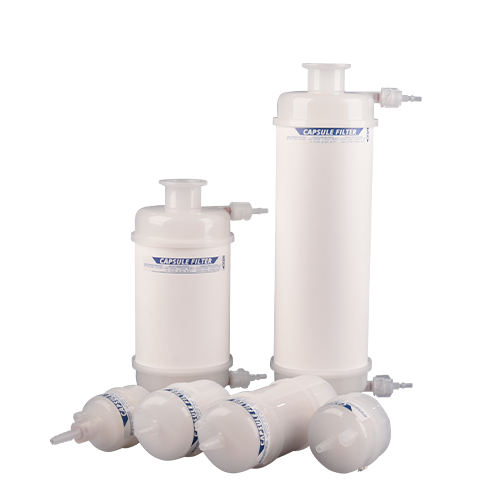
Overview of Membrane Solutions’ Capsule Filters
From the product page, we know:
-
MS capsule filters are intended for critical, small-volume filter applications in coatings, fine chemicals, pharmaceuticals and microelectronics. membrane-solutions.com
-
They use pleated, absolute-rated filter media, giving excellent retention of particles at fast flows. membrane-solutions.com
-
They are of all-polypropylene construction, which gives superior chemical resistance and durability in demanding process applications. membrane-solutions.com
-
There are different filter media types available: PES, PTFE, PP (polypropylene), Nylon, plus options for glass fiber high-retention efficiency filters. membrane-solutions.com
These features indicate that the material choice is central to performance in terms of retention, flow, compatibility, and durability.
What materials are used & their roles
Below are the key materials used in our capsule filters and the functions / advantages of each:
| Material | Where it is used | Key Benefits |
|---|---|---|
| Polypropylene (PP) | Filter housing and structural parts; some filter media types | Excellent chemical resistance, inertness to many solvents/acids/bases; good mechanical strength; cost-effective |
| PES (Polyethersulfone) | Filter media for many capsule filter options | Hydrophilic/hydrophobic variants; good for low protein binding; good flow rates and particle retention; often used for biologics or when lower binding is needed. |
| PTFE (Polytetrafluoroethylene) | Filter media in PTFE capsule filters | Very high chemical and thermal resistance; excellent for aggressive solvents or hydrophobic filtration tasks. |
| Nylon | Filter media in nylon capsule filters | Good mechanical strength, generally good compatibility; sometimes used where PES or PTFE aren’t optimal. |
| Glass Fiber | High retention efficiency capsule filter options (GF) | Good for capturing large volumes of particulates; high retention while maintaining flow; often used in pre-filtration or high particulate load situations. |
Why “all-polypropylene construction” matters
Your company’s product page states that the capsule filters have all polypropylene construction for superior chemical resistance and durability. membrane-solutions.com This typically means not just the media but also the internal components (seals, inner core, support structures) are made of polypropylene (or compatible inert plastics) unless otherwise specified.
Advantages:
-
Reduced risk of component incompatibility (swelling, distortion, leaching) when exposed to harsh chemicals.
-
Lower background / impurity risk since polypropylene is relatively inert.
-
Longevity in demanding processes, especially where frequent sterilization or cleaning is required.
Choosing the right media material for your application
To pick the best capsule filter from Membrane Solutions’ range, consider:
| Application Needs | Material to Choose | Rationale |
|---|---|---|
| Filtering aqueous buffers, biological fluids | PES or Nylon | They often have lower protein binding and good compatibility in watery environments. |
| Solvent filtration (organic, harsh) | PTFE or Polypropylene | PTFE is highly resistant to solvents; PP housing ensures structural integrity. |
| High particulate load | Glass Fiber prefilter or GF capsule filters | To avoid clogging of finer media; maintain flow. |
| Sterile filtration, protein work | PES with sterilization compatibility, or sterilizable Nylon filters | To preserve activity, reduce binding, ensure sterility. |
Summary
-
Capsule filters from Membrane Solutions are made using materials such as polypropylene (PP), PES, PTFE, Nylon, and glass fiber, each chosen based on chemical resistance, particle retention, flow, and durability.
-
The all-polypropylene construction ensures the non-structural parts are robust and chemically compatible.
-
Material selection depends on your specific needs: fluid type (aqueous vs solvent), particulate load, protein interactions, sterilization, etc.