
Industrial Wastewater Treatment: A Comprehensive Guide
2025-03-25
MS
7
Industrial wastewater is often heavily polluted, containing various contaminants that must be treated before discharge or reuse. To ensure effective purification, industrial wastewater treatment is divided into three key stages: Primary Treatment, Secondary Treatment, and Tertiary Treatment. Each of these stages plays a crucial role in removing different types of pollutants. Let’s explore how they work.
1. How Does the Industrial Wastewater Treatment Process Work?
1)Primary Treatment: Removing Solid Waste
The primary treatment phase focuses on removing solid matter from wastewater. The process begins with mechanical filtration to remove larger contaminants. Then, the wastewater enters sedimentation tanks, where solids either float to the top or settle at the bottom. The remaining sludge is transferred to a digester for further processing. This stage primarily relies on mechanical equipment to reduce suspended solids.
2)Secondary Treatment: Eliminating Organic Matter
Secondary treatment aims to remove soluble organic matter and remaining suspended solids that escaped the primary process. It primarily utilizes biological processes to degrade organic pollutants. Common methods include:
- Biofiltration: Sand filters, contact filters, trickling filters, or ceramic membranes help remove residual sediments.
- Aeration: Microorganisms break down organic pollutants by mixing wastewater with oxygen-rich solutions.
- Oxidation Ponds: Wastewater is stored in lagoons or ponds for natural degradation over two to three weeks.
3)Tertiary Treatment: Advanced Purification
If the receiving water body is highly sensitive to pollution, tertiary treatment is used to further purify wastewater. This stage removes nutrients like phosphates and nitrates and improves water quality using techniques such as:
- Chemical Treatment
- Activated Carbon Filtration
- Sand Filtration
- Membrane Filtration (e.g., reverse osmosis,ultrafiltration)
2. Membrane Solutions Industrial Wastewater Treatment Methods
To achieve efficient and cost-effective wastewater treatment, membrane Solutions offer advanced filtration technologies, including membrane separation and MBR processes.
l Membrane Separation Technology
Membrane separation is an innovative purification method that offers several advantages over traditional techniques:
- Low energy consumption
- High efficiency and cost-effectiveness
- Simple operation and scalability
Common membrane filtration technologies include:
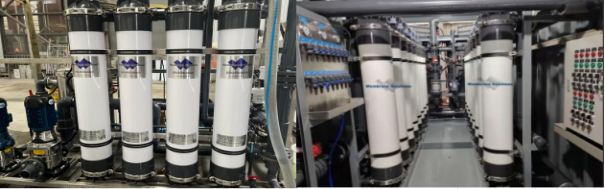
Microfiltration (MF)/Ultrafiltration (UF)/Reverse Osmosis (RO)
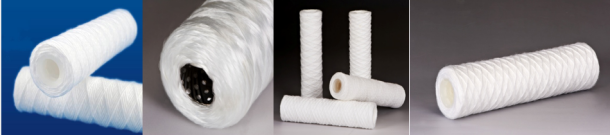
Our company provides a range of pre-filtration solutions, including melt-blown cartridges, string wound cartridges, and pleated filter cartridges, which are widely used in pretraitement of industrial wastewater treatment.
MBR Process: Combining Membrane and Biological Treatment
The Membrane Bioreactor (MBR) process integrates high-efficiency membrane filtration with traditional activated sludge treatment. Key benefits include:
- Compact design and small footprint
- Stable effluent quality with high organic matter removal efficiency
- Reduced sludge production, lowering operational costs
- Effective ammonia nitrogen removal
- Easy retrofitting for existing wastewater treatment plants
By using MBR Membrane Modules, wastewater undergoes biological treatment and is then filtered through a membrane system before discharge, ensuring high-quality effluent.
3. The Role of Pre-Treatment in Enhancing Wastewater Filtration Efficiency
Before undergoing membrane filtration or biological treatment, industrial wastewater often requires pre-treatment to optimize filtration performance and extend membrane lifespan. Effective pre-treatment methods include:
- Coarse Filtration: Using screen filters or sedimentation to remove large debris and reduce fouling.
- Chemical Conditioning: Adding coagulants or flocculants to bind fine particles, improving filtration efficiency.
- Pre-Filtration with Cartridges: Utilizing melt-blown, string-wound, or pleated filter cartridges to remove suspended solids before entering membrane systems.
By integrating pre-treatment solutions, industries can enhance wastewater treatment efficiency, lower operational costs, and achieve more sustainable water management.
Conclusion
For more detailed insights and inquiries about Industrial Wastewater Treatment, please visit the Membrane Solutions website at www.zsxmh.com. You can leave a message or follow us for updates on our latest products and innovations. We’re here to assist you with your filtration needs and provide tailored solutions to meet your specific requirements. Don’t hesitate to reach out!